
6 min read
Ninh Binh is limestone karst country two hours south of Hanoi, where the boats are rowed and the roads run past rice fields. You can rush the highlights in two days. Here is how to spend a week instead, without spending much.
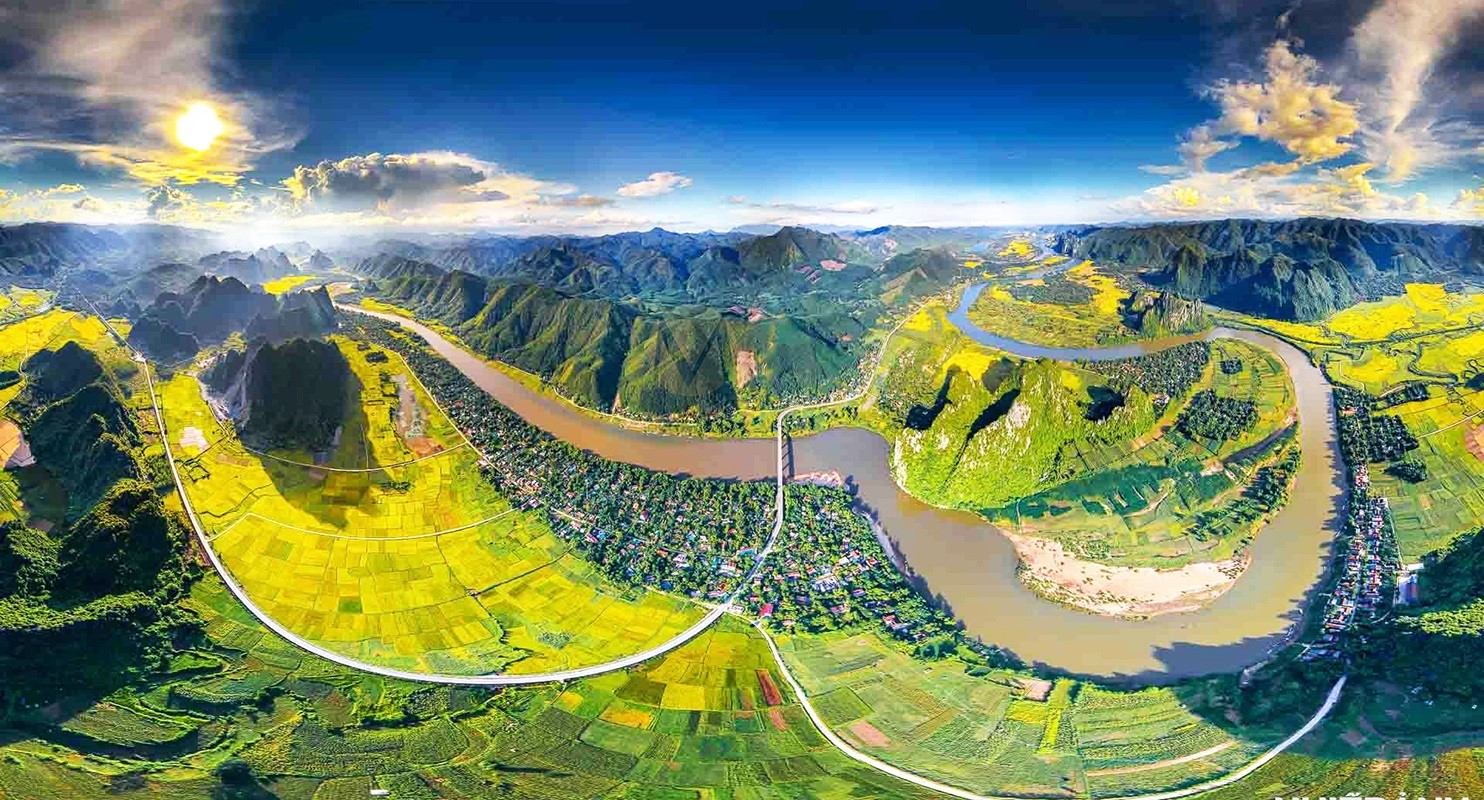
Ninh Binh gets called "Halong Bay on land" so often that the phrase has stopped meaning anything. What it actually is: a low, flooded plain about two hours south of Hanoi, punched through with limestone towers, where the boats are rowed rather than motored and most of the roads between the sights run past somebody's rice field. You can see the headline attractions in two days. A week lets you stop hurrying, and that is when the place starts to work.
This is a budget itinerary, but not a grim one. Ninh Binh is genuinely cheap — there is no expensive infrastructure to pay for, homestays are family-run, and the food is regional rather than touristic. A week here costs less than three days in Halong.
What is in this guide
- Getting to Ninh Binh from Hanoi
- Where to base yourself
- Days 1-2: Trang An and the boat you will remember
- Day 3: Tam Coc by bicycle
- Day 4: Mua Cave and Hoa Lu
- Day 5: Cuc Phuong National Park
- Day 6: Van Long, Bai Dinh, or nothing at all
- What to eat in Ninh Binh
- What a week in Ninh Binh actually costs
- When to go
- Planning your trip
Getting to Ninh Binh from Hanoi
Three options, in ascending order of comfort. The train from Hanoi station takes roughly two and a half hours and drops you in Ninh Binh town itself; it is the cheapest and the most pleasant, though the schedule is limited. Sleeper-style limousine vans do the trip in about two hours door to door and will collect you from your hotel in the Old Quarter. Ordinary buses run from Giap Bat station and cost the least of all, but leave you further from where you want to be.
Skip the private transfer unless you are arriving straight from the airport with luggage. The public options are good here in a way they are not everywhere in Vietnam.
Where to base yourself
Most visitors stay in Tam Coc village, which has the highest concentration of homestays, restaurants, and bicycle rental, and is walking distance from the Tam Coc boat pier. It is also, in high season, the busiest part of Ninh Binh. If you would rather be surrounded by fields, look at the homestays scattered around Trang An and toward Hoa Lu — quieter, greener, and you will want a scooter.
Ninh Binh town itself is a working provincial town with cheap hotels and good street food, but little charm. Stay there only if you are relying on the train.

Days 1-2: Trang An and the boat you will remember
Arrive, settle in, and eat. Then give the whole of your first full day to Trang An.
The Trang An Landscape Complex was inscribed by UNESCO in 2014 for both its geology and its archaeology, and the boat trip through it lasts around three hours. You sit two or three to a sampan while a local woman rows you through a chain of flooded caves, some of them low enough that you will want to keep your head down. Three routes leave from the main pier; the longest passes the most caves, the shortest passes the film set built for Kong: Skull Island.
Go early. Boats start around 7am, the light is better, and by mid-morning in season the queue at the pier is long. Bring water and something for your head — there is no shade on the boat.
Day 3: Tam Coc by bicycle
Tam Coc is the smaller, older sibling of Trang An: three caves, a shorter row, and rice fields on both banks rather than forest. Rent a bicycle in the village and ride out through the fields to the pier — the ride is genuinely part of the point.
The timing that matters: the rice ripens gold in late May and early June, and the fields either side of the river turn the colour that fills every photograph of Ninh Binh you have ever seen. Outside those weeks it is green, or it is stubble. Both are fine. Neither is what the pictures showed you.
Afterwards, cycle the short distance to Bich Dong Pagoda, built into the cliff on three levels, and climb to the top one. It takes twenty minutes and almost nobody bothers.

Day 4: Mua Cave and Hoa Lu
Mua Cave is not really about the cave. It is about the roughly 500 stone steps beside it, which climb a karst to a dragon statue and the view that most people come to Ninh Binh for — the whole Tam Coc valley laid out below with the river winding through it. The climb is steep and uneven. Go at first light or late afternoon; the middle of the day is punishing and crowded.
In the afternoon, ride to Hoa Lu, the capital of Vietnam in the tenth and eleventh centuries under the Dinh and early Le dynasties. What survives is two modest temples rather than a city, which disappoints people expecting ruins. Read a little before you go and it becomes far more interesting than it looks.
Day 5: Cuc Phuong National Park
Vietnam's first national park, about an hour and a half northwest, and worth the trip even if you are not a birder. The Endangered Primate Rescue Center inside the park houses langurs and gibbons confiscated from the wildlife trade, and the guided visit is one of the few genuinely educational hours you can spend in the region. There is also a thousand-year-old tree, several walking trails, and — in April and May, if you are lucky with the weather — a butterfly season that is exactly as unlikely as it sounds.
You can do it as a long day trip. Staying overnight inside the park is cheap and lets you walk before the day visitors arrive. See our guide to the best national parks in Vietnam for how it compares with the rest.
Day 6: Van Long, Bai Dinh, or nothing at all
By now you have earned a slow day. Three ways to spend it.
- Van Long Nature Reserve: a shallow wetland with a rowed boat trip, far fewer visitors than Trang An, and a decent chance of spotting Delacour's langur on the cliffs.
- Bai Dinh Pagoda: enormous, modern, and polarising. The largest temple complex in Vietnam, built mostly in the 2000s. Some travellers find it impressive, others find it a theme park. Go and decide.
- Nothing: hire a scooter, pick a direction, and ride the back lanes between the karsts. This is what most people say afterwards was their favourite day.
What to eat in Ninh Binh
Two local specialities, both worth seeking out. De nui is mountain goat, usually served grilled or steamed with lemon leaf and eaten with rice paper and herbs; the goats graze on the karsts, which is the whole point. Com chay is a crisp fried disc of rice, served with a thick meat sauce — it travels badly and is genuinely a local thing rather than a national dish.
Both are cheap. A meal for two with beer in a village restaurant costs a fraction of the same in Hanoi.
What a week in Ninh Binh actually costs
Approximate, and deliberately broad — prices move. A family homestay room runs well under what you would pay in Hanoi, bicycle hire is a couple of dollars a day and a scooter perhaps three times that. The boat trips at Trang An and Tam Coc are the largest single expenses of the week and are fixed-price per boat, so they get cheaper the more of you there are. Entrance fees to Mua Cave, Hoa Lu, and Bai Dinh are small individually and add up over a week.
The honest summary: Ninh Binh is one of the cheapest places in Vietnam to spend a week, and the savings come from there being nothing expensive to buy rather than from doing without.
When to go
The north has a real winter. February to April is cool, dry, and green. Late May and early June bring the golden rice and the heat together. July and August are hot and wet. September to November is comfortable again and much quieter. December and January can be grey and cold enough to want a jacket, which surprises people.
Planning your trip
Ninh Binh pairs naturally with Hanoi before it and either Halong or the northern mountains after. If you would rather not organise the transport and the homestays yourself, our specialists build private, tailor-made itineraries around the pace you actually want to travel at.